Your logo is often the first thing people recognize about your brand. It shows up on your website, your packaging, your social media, and everywhere your business makes an impression. So it makes sense that protecting it is a priority.
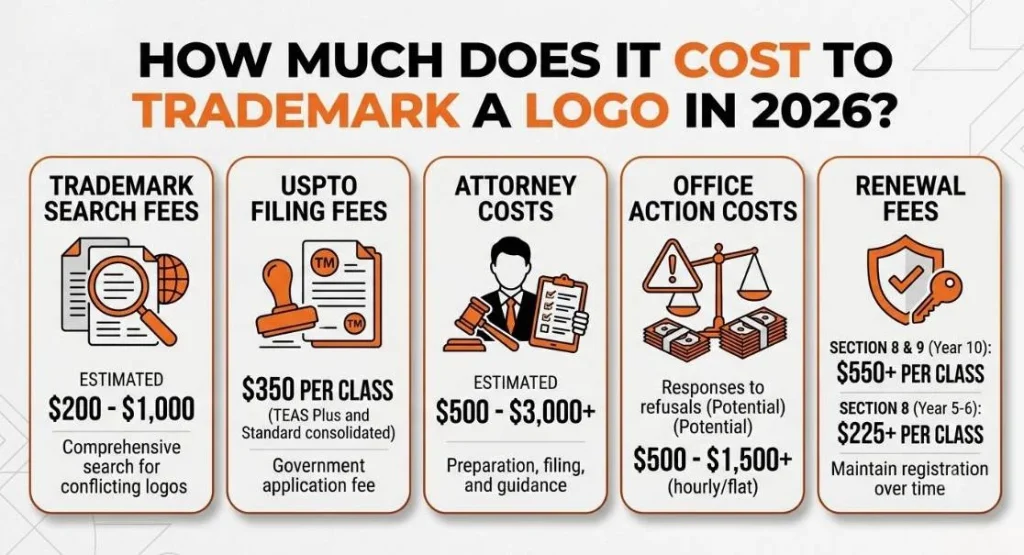
But before you file, the most common question is simple: how much does it actually cost to trademark a logo?
The honest answer is that it depends on several factors. This guide breaks down every cost involved in trademarking a logo in 2026 so you can plan your budget with confidence. Many business owners researching the cost to trademark a name or logo are surprised by how much filing choices can affect the total expense.
First, a clarification that trips up a lot of people. Trademarking a logo and trademarking a business name are two separate filings.
| What You’re Protecting | What It Covers | Separate Filing Needed? |
| Business name only | The words in your brand name | Yes |
| Logo only | The visual design of your logo | Yes |
| Name and logo combined | The full branded mark as one design | Filed as one application |
| Name and logo separately | Maximum protection for both elements | Two separate applications |
Most trademark attorneys recommend filing separately for the name and the logo. That way, if you ever redesign your logo, your name remains protected under its own registration. Filing them together means a logo redesign could require a new trademark application entirely. A common question many business owners ask is, should I trademark my logo before expanding my brand further.
All US trademark applications are filed through the USPTO. The government filing fee depends on which application type you choose.
| Application Type | Fee Per Class | Best For |
| TEAS Plus | $250 per class | Standard logo applications using pre-approved descriptions |
| TEAS Standard | $350 per class | Applications needing custom descriptions of goods or services |
These fees are per class of goods or services. If your logo is used across multiple industries, say, clothing and online retail, you’ll pay the filing fee for each class. Most small businesses file in one or two classes. Many business owners researching the cost to trademark a logo are surprised by how much the filing choices can affect the total expense.
Before filing a logo trademark, a clearance search is strongly recommended. You need to confirm no existing registered trademark is similar enough to yours to cause a conflict. Skipping this step risks rejection and losing your filing fee.
• Basic USPTO database search — free using the USPTO’s TESS system
• Professional design search — $300 to $800, covers visual similarity, not just word marks
• Comprehensive attorney-led clearance search — $500 to $1,500
Logo trademark searches are more complex than name searches because they involve visual similarity, not just text. A professional search that covers design elements is worth the investment before filing. You can also start with a basic trademark availability check online before moving into a full professional search.
You can file a logo trademark yourself, but professional help significantly reduces the risk of rejection, especially for design marks where the description of the logo must be written precisely.
| Service | Typical Cost Range |
| Logo trademark search | $300 to $1,000 |
| Application preparation and filing | $500 to $1,500 |
| Responding to an Office Action | $500 to $2,000+ |
| Full attorney-managed filing | $1,000 to $3,000 total |
Unlike a word mark, a logo trademark application requires a precise written description of the design elements. This includes colors, shapes, text, and how they relate to each other. Getting this wrong is one of the most common reasons logo trademark applications receive Office Actions. An attorney or professional filing service ensures the description meets USPTO standards.
One decision that affects both your filing and your long-term protection is whether to file your logo in color or in black and white.
| Filing Type | Protection Scope | Recommendation |
| Black and white only | Covers the design in any color combination | Broader protection |
| Specific colors claimed | Only protects the exact colors filed | Narrower protection |
| Both filed separately | Full coverage across all uses | Maximum protection |
Most trademark professionals recommend filing in black and white first. This gives you protection across all color variations of the logo. If color is a distinctive and central part of your brand identity, a separate color filing adds an additional layer of protection. A common question many business owners ask is, should I trademark my logo before expanding my brand further.
| Scenario | Approximate Total Cost |
| DIY filing, one class, no issues | $250 to $350 |
| DIY filing with professional search | $550 to $1,150 |
| Attorney-assisted filing, one class | $750 to $1,850 |
| Attorney-assisted with Office Action response | $1,500 to $3,500+ |
| Name and logo filed separately with attorney | $2,000 to $5,000+ |
Trademarking a logo isn’t a one-time cost. Like a business name trademark, a logo trademark requires maintenance filings to stay active.
| Within a 6-month grace period | When Due | USPTO Fee |
| Section 8 Declaration | Between years 5 and 6 | $225 per class |
| Section 9 Renewal | Every 10 years | $325 per class |
| Combined Section 8 and 9 | At 10-year mark | $550 per class |
| Late filing surcharge | Within 6-month grace period | $100 per class extra |
The biggest variables in total trademark logo cost are:

• Number of classes filed, each additional class multiplies every fee
• Whether you file in color, black and white, or both
• Whether an Office Action is issued requiring a formal response
• Whether you file the name and logo separately or together
• Professional fees if you use an attorney or filing service
• International filing if your brand operates outside the United States
If your logo is central to how customers recognize your brand, the answer is yes. A registered logo trademark gives you the legal right to stop others from using confusingly similar designs in your industry. Without registration, your options for enforcement are limited to common law rights, which are harder to prove and harder to enforce.
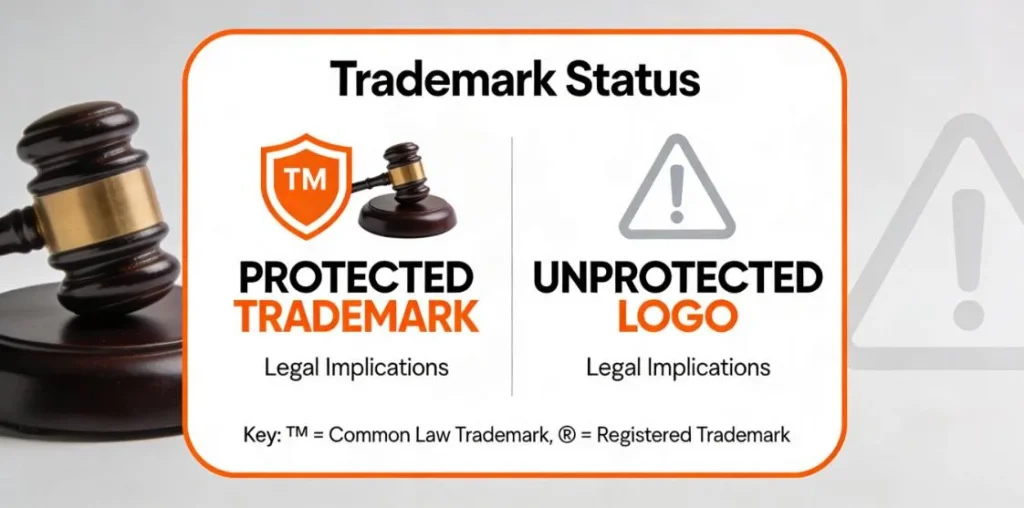
The cost of trademark registration is almost always lower than the cost of rebranding after losing a dispute, or the cost of litigation without registered rights behind you.
Trademarking a logo in 2026 starts at $250 for a basic single-class DIY filing and can grow depending on the complexity of your application, how many classes you need, and how much professional support you involve.
The smartest approach is to treat it as a long-term brand investment rather than a one-time administrative task. A logo trademark that’s properly filed, maintained, and enforced is one of the most valuable assets your business can hold.
If you’re ready to protect your logo and brand identity, contact us for professional trademark guidance and filing support.
USPTO filing fees start at $250 per class for TEAS Plus and $350 for TEAS Standard. Most logo trademarks cost between $250 and $350 in government fees for a single class. Attorney fees, if used, are separate and typically add $500 to $1,500 or more, depending on complexity.
Yes, in most cases. Filing them separately gives each element its own independent protection. If you redesign your logo later, your trademark remains intact. Filing them together means a logo change could require an entirely new trademark application.
Filing in black and white provides broader protection because it covers the design across all color variations. If color is a distinctive part of your brand identity, consider filing both a black and white version and a color version for maximum coverage.
An Office Action is an official letter from the USPTO examiner raising concerns about your application. For logo trademarks, common issues include an incorrect or vague description of the design elements, likelihood of confusion with an existing mark, or missing information. A formal response is required within three months.
A registered trademark can last indefinitely as long as maintenance filings are made on time. A Section 8 Declaration is due between years five and six, and a Section 9 Renewal is required every ten years. Missing these deadlines results in the cancellation of the registration.
