Opening a status check on your trademark application and seeing the word abandoned is not a pleasant moment. If you’re unsure what abandonment means, our guide on what is an abandoned trademark explains the concept in more detail. But before assuming the worst, it is worth understanding exactly what a Petition to Revive Trademark applications involves as a specific document and filing, what makes it succeed or fail, and how it differs from simply refiling.
This guide focuses specifically on the petition itself: what goes into it, how it is evaluated, and the practical writing and documentation choices that affect whether it is granted.
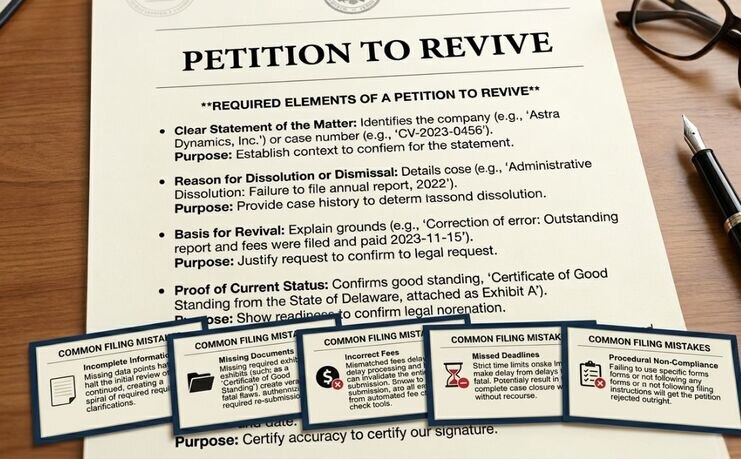
A Petition to Revive is a formal document filed with the USPTO requesting that an abandoned trademark application be restored to active status. It is filed through the Trademark Electronic Application System (TEAS) using a specific form designed for this purpose. The petition is not simply a request; it must include specific elements that the USPTO examiner will evaluate before deciding whether to grant it.
Every petition must clearly identify which application is being revived by its serial number. This seems obvious but errors in the serial number, or filing under the wrong application when an applicant has multiple pending matters, are a common avoidable mistake that delays processing.
This is the core legal claim of the petition. The applicant must declare that the failure to respond to the USPTO within the required period was unintentional. This declaration must be made by someone with the authority to do so on behalf of the applicant and is signed under penalty of perjury under USPTO rules. Getting this declaration right, both in terms of who signs it and how it is worded, is foundational to the petition’s validity.
A Petition to Revive is not just a request to undo the abandonment. It must be accompanied by the response or filing that should have been submitted in the first place. If the abandonment occurred because an Office Action went unanswered, the response to that Office Action must be filed along with the petition. Understanding what a trademark Office Action is and how to respond can help ensure the accompanying filing is complete. If the abandonment occurred because a Statement of Use was not filed, the Statement of Use (or an extension request) must accompany the petition.
The current USPTO fee for a Petition to Revive is $100 per class of goods or services covered by the application. This fee is paid at the time of filing through TEAS.
| Evaluation Factor | What It Means | How to Address It in the Petition |
| Timing | Was the petition filed within 2 months of the abandonment notice? | File as soon as possible after discovering abandonment; do not delay |
| Completeness | Are all required elements present and correctly formatted? | Include the declaration, the missing response, and the correct fee together |
| Credibility of the unintentional claim | Does the explanation support a finding of genuine oversight? | Provide a specific, honest account of what happened without overexplaining |
| Authority to sign | Was the declaration signed by someone authorized to act for the applicant? | Confirm the signatory has proper authority under USPTO rules |
| Underlying response quality | Is the accompanying response (Office Action reply, SOU, etc.) itself adequate? | Treat the accompanying filing with the same care as if no abandonment had occurred |
The unintentional declaration does not require an elaborate explanation in most cases. The USPTO’s form includes the required language for the declaration itself. What matters is that the underlying facts genuinely support the claim. Common legitimate scenarios include an email notification going to an outdated address, a calendar error within an organization managing multiple trademark matters, a change in personnel where the deadline tracking did not transfer properly, or a genuine clerical oversight in an otherwise active matter.
A Petition to Revive Trademark applications where the underlying facts suggest the applicant deliberately chose not to respond, perhaps because they were reconsidering the application or had not yet decided whether to proceed, does not meet the unintentional standard. If the application sat abandoned for an extended period before the petition was filed, or if there is a pattern of similar lapses across multiple applications from the same applicant, examiners may scrutinize the unintentional claim more closely.
A successful Petition to Revive restores the application to its position before abandonment, including its original filing date and priority position. This priority date can be significant if other parties have filed applications for similar marks in the interim. Starting over with a new application means a new filing date, which could place you behind another applicant who filed during the period your original application was abandoned.
The Petition to Revive fee is $100 per class. A new application filing fee is $250 to $350 per class for TEAS Plus or TEAS Standard, plus the examination process restarting from the beginning. For a broader breakdown of trademark expenses, see our guide on trademark costs and renewal fees. In almost every case where the unintentional standard can genuinely be met, filing the petition is both cheaper and strategically better than starting over.
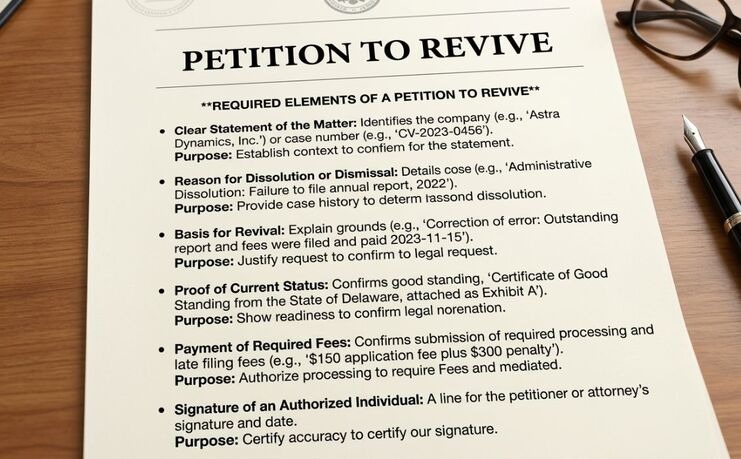
The USPTO typically reviews petitions to revive within a few weeks to a couple of months, though this varies based on examiner workload. If the petition is granted, the application returns to pending status and the accompanying response or filing is reviewed as part of the normal examination process. If the petition is denied, the applicant is notified of the reason, and in some cases may be able to address the deficiency and refile the petition if still within the available timeframe, or may need to pursue a new application.
A dead trademark application is recoverable in many cases, but the Petition to Revive is a specific document with specific requirements, not a general request for forgiveness. Getting each required element right, the serial number, the declaration, the accompanying response, and the fee, and filing within the two-month window gives the petition its best chance of success.
When the underlying circumstances genuinely support an unintentional abandonment claim, the petition is almost always the better path than starting over, both in cost and in preserving your original priority date.
Trademark Swyft helps applicants prepare and file petitions to revive abandoned applications correctly the first time. If your application has been marked abandoned, reach out to us and we will assess your options.
It is a formal document filed with the USPTO through TEAS requesting that an abandoned application be restored to pending status. It requires the application serial number, a declaration that the abandonment was unintentional, the response or filing that was missed, and a $100 per class fee.
Generally two months from the mailing date of the USPTO’s Notice of Abandonment. Filing as soon as possible after discovering the abandonment is strongly recommended rather than waiting until close to the deadline.
Genuine oversights such as notifications going to an outdated email address, calendar tracking errors, or personnel changes that disrupted deadline management typically qualify. Deliberate decisions not to respond, or extended delays before filing the petition, can undermine the unintentional claim.
The application serial number, a signed declaration of unintentional abandonment from someone with authority to act for the applicant, the response or filing that should have been submitted (such as an Office Action reply or Statement of Use), and the $100 per class filing fee.
In almost all cases where the unintentional standard can be met, reviving the existing application is better. It costs less ($100 per class vs. $250 to $350 per class for a new application) and preserves your original priority date, which can matter if other applications were filed during the period of abandonment.
